Black spots on teeth can be caused by surface staining, hardened tartar, tooth decay, an old restoration or changes inside a tooth after an injury. In children, black dots or lines can sometimes be a type of extrinsic dental stain rather than a cavity.
Because colour alone cannot tell you what is happening, a persistent black mark should be examined rather than scraped, bleached or treated with home remedies. At Little Bites Dental Clinic in Faridabad, the first step is identifying the cause before deciding whether treatment is needed.
What Causes Black Spots on Teeth?
Black spots can develop for several reasons. Where the mark appears, whether it is hard or soft, whether one or several teeth are affected, and whether you have other symptoms are often more useful than colour alone.
1. Surface Stains
Coffee, tea, tobacco and highly pigmented foods and drinks can leave extrinsic stains on the enamel. These stains usually sit on the outer surface of the tooth and may affect several teeth.
Professional teeth cleaning may remove some surface staining. Whitening may be considered later if the teeth and gums are otherwise healthy.
2. Black Tartar Near the Gumline
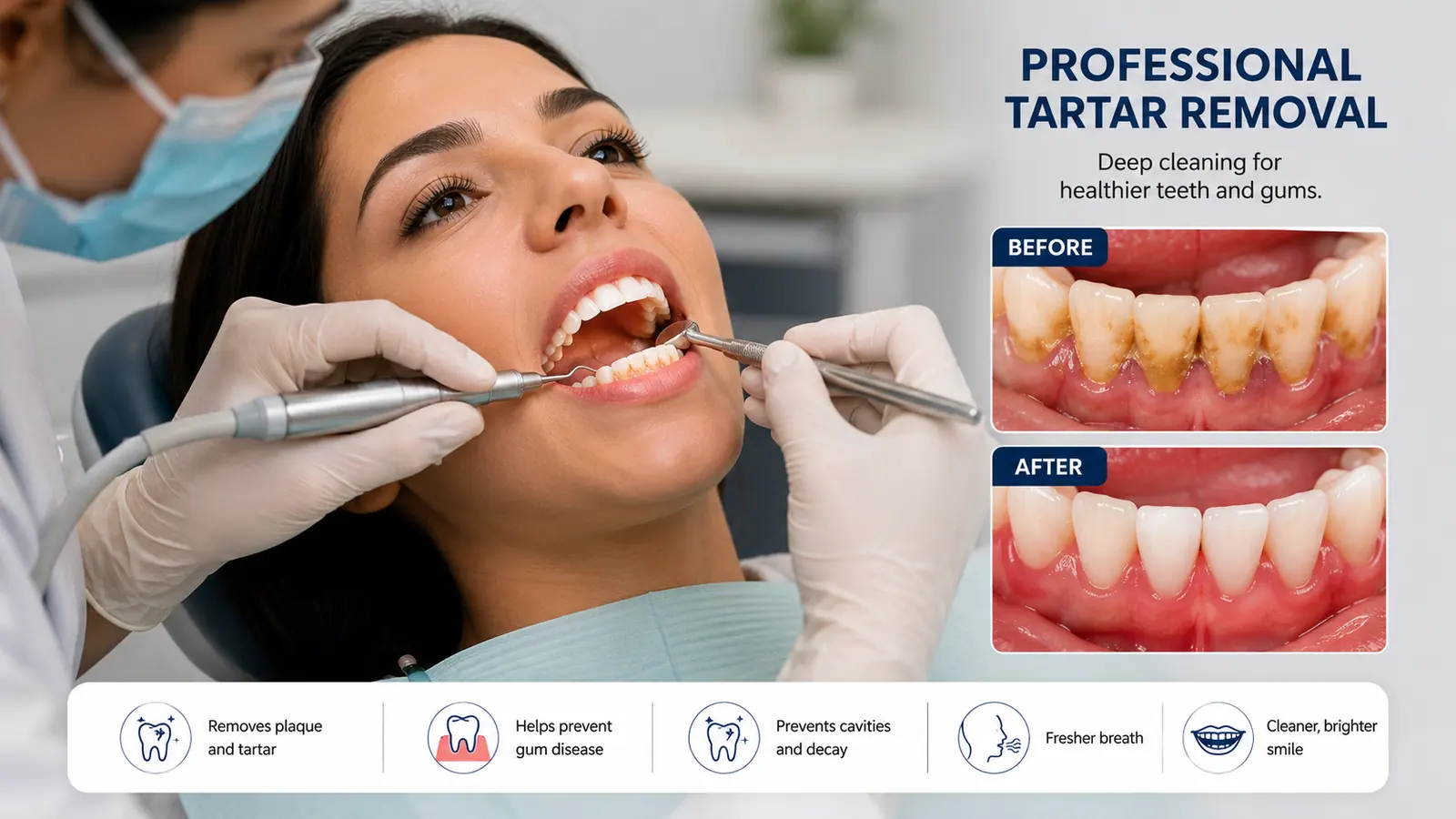
Plaque that remains on teeth can harden into calculus, commonly called tartar. Tartar may appear yellow, brown or black and often feels hard or crust-like. Once it has mineralised, brushing and flossing cannot reliably remove it.
Do not try to scrape tartar away with a pin or metal instrument because this can injure the gums or tooth surface.
3. Tooth Decay
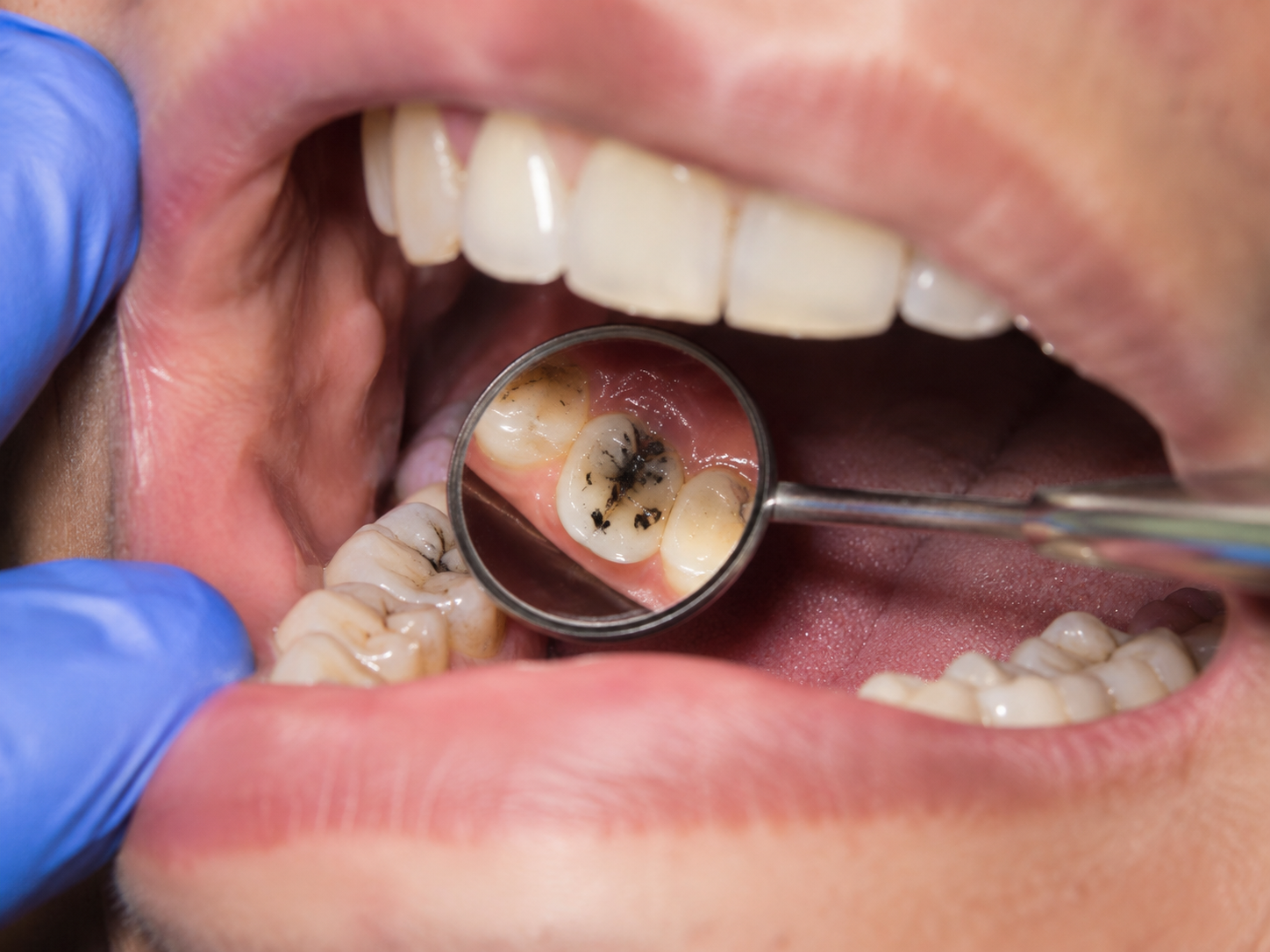
A cavity may appear white, brown or black, depending on its stage and location. Importantly, early tooth decay does not always cause pain. As decay progresses, patients may develop a visible hole, toothache or sensitivity to hot, cold or sweet foods.
However, a dark groove on a molar is not automatically a cavity. Some pits and fissures become stained without being actively decayed. A dental examination is more reliable than judging the tooth by colour alone.
4. A Tooth That Darkens After an Injury
If one whole tooth becomes grey, brown or noticeably darker after a fall, sports injury or accident, the colour change may be related to changes inside the tooth.
Dental trauma can cause tooth discoloration, sometimes along with pain, swelling or looseness, but discoloration can also occur without obvious symptoms. This is particularly important for parents to recognise after a child falls and hits a front tooth.
5. Old Fillings or Dental Restorations
Amalgam and some other dental materials may make part of a tooth appear grey or dark. A dark edge around an existing filling may also represent harmless staining or possible recurrent decay. Examination, rather than appearance alone, determines whether the restoration actually needs treatment.
Are Black Spots on Children's Teeth Always Cavities?
No. Black marks on children's teeth can be cavities, but they can also be extrinsic black stain or another form of discoloration.
Extrinsic black stain in children commonly appears as small dark dots or lines, often around the cervical area near the gums. Because black stain can recur after cleaning, parents should not assume that recurrence means a child has suddenly developed multiple cavities. A pediatric dentistry assessment is the safest next step.
What If the Tooth Turned Black After Silver Diamine Fluoride?
Silver diamine fluoride, or SDF, may be used in selected patients to help arrest certain carious lesions. A known effect of SDF treatment is permanent black staining of the treated carious area.
So, if a child's tooth has previously received SDF, the black area may be an expected treatment effect rather than evidence that the treatment has failed.
Black Spot or Cavity: How Can You Tell the Difference?
You usually cannot confirm the difference reliably at home.
| What you notice | Possible explanation | Appropriate next step |
|---|---|---|
| Flat staining on several teeth | External stain | Dental examination; cleaning if appropriate |
| Hard dark deposit near gums | Calculus or tartar | Professional scaling |
| Single dark pit or groove | Stain or decay | Dental examination |
| Hole plus pain or sensitivity | Possible tooth decay | Prompt dental assessment |
| Whole tooth turns grey or dark | Previous trauma or pulpal change | Trauma or pulp assessment |
| Black line or dots in a child | Extrinsic black stain, tartar or caries | Pediatric dental assessment |
| Black area after SDF treatment | Expected staining of treated caries | Continue recommended follow-up |
A dark spot therefore describes what a tooth looks like, not the diagnosis.
- Dr. Nikitaa Dhingra Sanan, Little Bites Dental Clinic, Faridabad
How Does a Dentist Check a Black Spot?
A dentist first examines the location, shape and surface characteristics of the mark. They may also check:
- Whether the tooth is sensitive.
- Whether a cavity is present.
- The condition of nearby gums.
- Existing fillings or crowns.
- Whether the tooth has suffered previous trauma.
Dental X-rays may be appropriate when decay is suspected between teeth, beneath an existing restoration or in an area that cannot be adequately assessed by direct examination.
This diagnostic step matters because not every black spot needs drilling, and not every dark mark will improve with whitening.
How Are Black Spots on Teeth Treated?
Surface Staining or Tartar
Professional cleaning, scaling or polishing may remove external stains and hardened deposits. If the remaining discoloration is cosmetic and the teeth are healthy, whitening may be considered. Whitening products primarily affect tooth colour; they do not treat cavities or remove calculus.
Tooth Decay
Not every carious lesion requires exactly the same treatment. Early or noncavitated lesions may sometimes be managed using fluoride-based or other nonrestorative approaches. More advanced cavitated lesions may require restorative treatment such as a filling.
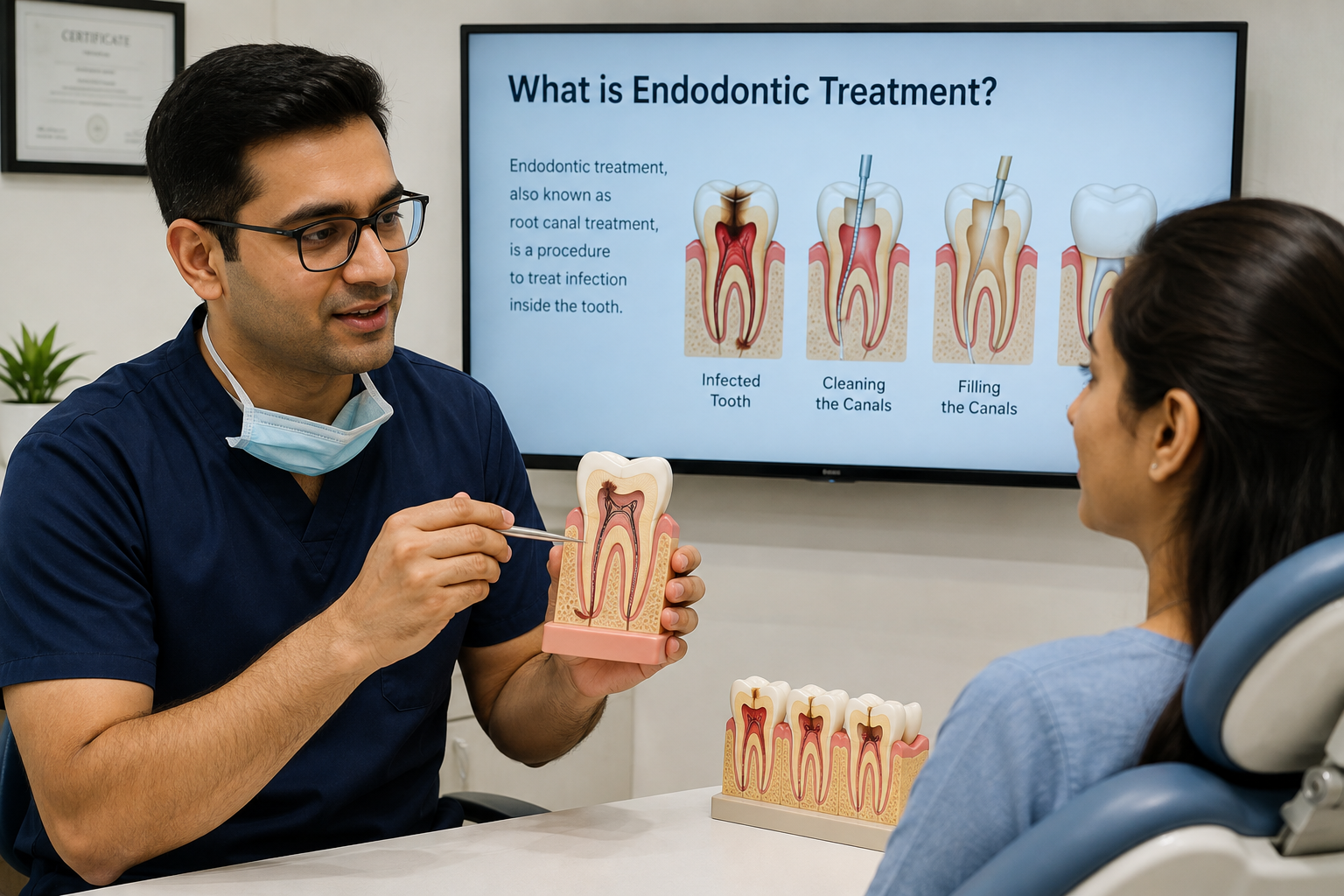
If decay has significantly affected the pulp, root canal treatment or another treatment may be considered after diagnosis.
A Dark Tooth After Trauma
A discoloured tooth after an injury does not automatically require root canal treatment. The dentist evaluates symptoms, pulp health and the type of injury before deciding whether observation, follow-up or treatment is appropriate.
Extrinsic Black Stain in Children
Professional cleaning can improve black extrinsic staining, but recurrence is possible. Current research also shows that the biology of pediatric black stain is more complex than simply poor brushing.
Persistent black spot or dark tooth?
A dental examination can identify whether the mark is stain, tartar, decay, trauma-related discoloration or something else.
WhatsApp UsWhat Should You Avoid Doing?
- Do not scrape the spot with pins, blades or metal tools.
- Do not use lemon juice or other acidic DIY whitening mixtures.
- Do not assume every black spot is tooth decay.
- Do not start whitening before determining why the tooth is dark.
- Do not ignore a tooth that changes colour after an injury.
The safest approach is diagnosis first, treatment second.
How Can You Reduce Stains and Tooth Decay?
Brush twice daily with fluoride toothpaste and clean between your teeth regularly. Fluoride helps strengthen enamel and supports remineralisation during the early stages of the decay process.
A dentist-recommended toothpaste can help when it is chosen for your age, cavity risk, sensitivity and gum condition.
- Limit frequent sugary foods and drinks.
- Rinse with water after strongly coloured drinks.
- Avoid tobacco.
- Attend dental examinations according to your individual risk.
For children, brushing and fluoride advice should be age-appropriate. If your child is anxious about evaluation, a kid-friendly dentist in Faridabad can make the visit calmer.
When Should You See a Dentist for Black Spots on Teeth?
Arrange a dental examination if a black spot does not disappear with normal brushing, becomes larger, is associated with toothache or sensitivity, appears around a damaged filling, occurs with swollen or bleeding gums, or develops after a tooth injury.
Facial or mouth swelling, significant worsening pain, redness or a bad taste associated with dental infection should receive prompt dental attention. Read our tooth pain guide if symptoms are urgent.
For patients and parents in Faridabad and Delhi NCR, an examination at Little Bites Dental Clinic can help determine whether the dark area represents staining, tartar, tooth decay, trauma-related discoloration or another condition before treatment is planned.
Conclusion
Black spots on teeth: why they happen and what to do depends on the underlying cause, not simply how dark the tooth looks.
A black mark may represent an external stain, tartar, tooth decay, an old restoration, dental trauma or pediatric black stain. In selected patients, it may even be the expected result of silver diamine fluoride treatment. The most useful next step is to identify why the tooth is black before trying to remove or whiten the spot.
References
- American Dental Association / MouthHealthy - Whitening and tooth discoloration.
- NHS - Tooth decay.
- American Dental Association - Caries Management Clinical Practice Guidelines.
- American Dental Association - Silver Diamine Fluoride.
- PubMed - Chromogenic Bacterial Staining of Teeth: A Scoping Review.
- American Academy of Pediatric Dentistry - Management of Acute Dental Trauma.
- Cleveland Clinic - Tooth Discoloration.
Author / medical reviewer: Dr. Nikitaa Dhingra Sanan, BDS, MDS - Pediatric Dentist
Clinic: Little Bites Dental Clinic, Faridabad
Last medically reviewed: 28 August 2026
Medical disclaimer: This article provides general educational information and does not replace an individual dental examination, diagnosis or personalised treatment plan.