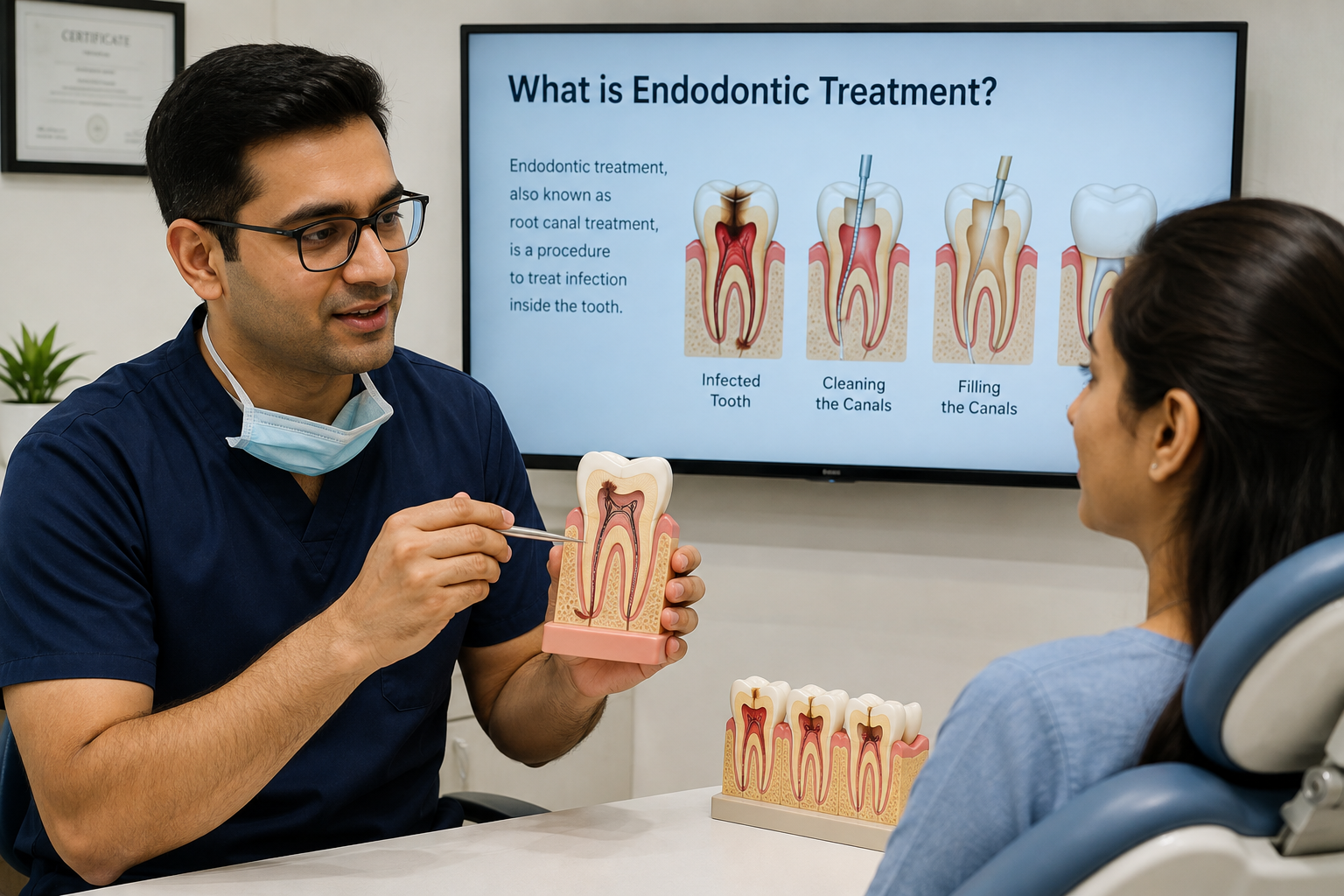
What is endodontic treatment? It is dental treatment focused on problems inside a tooth, especially the dental pulp and root canal system. The best-known endodontic procedure is root canal treatment, but endodontics can also include retreatment, treatment of dental injuries and selected endodontic surgery.
At Little Bites Dental Clinic in Faridabad, patients often hear terms such as root canal, RCT and endodontic treatment used together. This guide explains what they mean, when treatment may be needed, what happens during the procedure and when specialist care may be appropriate.
What Is Endodontic Treatment?
Endodontics is the area of dentistry concerned with the tissues inside the tooth, especially the dental pulp. The pulp contains nerves, blood vessels and connective tissue.
When the pulp becomes severely inflamed, infected or loses vitality, endodontic treatment may be required.
Common causes include deep tooth decay, cracks or fractures, dental trauma, repeated procedures on the same tooth, infection, abscess or failure of a previous root canal.
Is Endodontic Treatment the Same as a Root Canal?
Not exactly. Root canal treatment is one type of endodontic treatment. Endodontics is the broader field.
- Root canal retreatment
- Treatment of traumatic dental injuries
- Apicoectomy or other endodontic surgery
- Diagnosis of difficult tooth pain
The American Association of Endodontists describes root canal treatment as removing inflamed or infected pulp, cleaning and disinfecting the inside of the tooth, then filling and sealing the space.
What Exactly Does an Endodontist Do?
An endodontist is a dentist with additional training in diagnosing tooth pain and treating diseases of the dental pulp and root canals.
An endodontist may treat difficult root canal cases, previously treated teeth that become painful again, cracked or traumatised teeth, dental abscesses originating from the pulp, persistent tooth pain that is difficult to diagnose and selected surgical endodontic problems.
What Is the Difference Between a Dentist and an Endodontist?
A general dentist manages a broad range of oral-health problems, while an endodontist focuses primarily on conditions involving the inside of teeth.
| General Dentist | Endodontist |
|---|---|
| Provides broad dental care | Focuses on pulp and root-canal problems |
| Treats cavities, gum problems and restorations | Manages complex tooth pain and root canals |
| May perform routine root canals | Frequently treats complex endodontic cases |
| Handles general preventive and restorative care | Has additional specialist endodontic training |
When Might Endodontic Treatment Be Needed?
Possible warning signs include persistent or spontaneous tooth pain, sensitivity to hot or cold that lingers, pain when biting, swelling near a tooth, a recurring gum boil, tooth darkening after trauma, deep decay or a cracked tooth.
Symptoms alone cannot confirm the diagnosis. A toothache may instead come from gum disease, a high filling, sinus pressure or another condition. If pain is severe, our tooth pain guide can help you understand when urgent care may be needed.
What Happens During Root Canal Treatment?
- Examination and X-ray: The dentist evaluates the tooth and surrounding bone.
- Local anaesthesia: The tooth is numbed before treatment.
- Isolation: A dental dam is usually placed to keep the tooth clean and isolated from saliva.
- Access and cleaning: The dentist opens the tooth and removes inflamed or infected pulp.
- Shaping and disinfection: The root canals are cleaned and shaped.
- Filling and sealing: The canals are filled and sealed to reduce reinfection risk.
- Final restoration: A filling or dental crown may be required to protect the tooth after treatment.
Persistent tooth pain or swelling?
A dental examination can help identify whether the source is the pulp, gums, bite, sinus pressure or another issue.
WhatsApp UsIs Endodontic Treatment Painful?
Modern root canal treatment is performed under local anaesthesia, so the procedure itself should usually be comfortable once the tooth is properly numb. Some tenderness may occur afterwards, particularly if there was significant inflammation or infection before treatment.
Contact your dentist if pain becomes severe, swelling increases or symptoms worsen instead of improving.
Can an Endodontist Treat a Gum Infection?
An endodontist treats infections that originate from inside a tooth or around its root. A true gum infection, such as periodontal disease, usually involves the tissues supporting the teeth and may require treatment by a general dentist or periodontist.
The conditions can sometimes appear similar because both may cause swelling, tenderness or drainage. Accurate diagnosis is therefore important.
What Happens 10 Years After a Root Canal?
A successfully treated and properly restored tooth can remain functional for many years. However, a root canal-treated tooth still requires routine dental care.
- The final restoration leaks
- The tooth cracks
- New decay develops
- Previously untreated anatomy becomes infected
- The crown or filling fails
Patients should continue brushing, cleaning between teeth and attending dental reviews. Avoid heavy chewing on a recently treated tooth until the permanent restoration has been completed.
Benefits and Limitations
Endodontic treatment may preserve a natural tooth, remove diseased pulp, help control infection, restore comfortable chewing and avoid extraction when the tooth is restorable.
Possible limitations include temporary tenderness, persistent or recurrent infection, tooth fracture, need for retreatment, need for endodontic surgery or extraction if the tooth cannot be predictably restored.
Conclusion
What is endodontic treatment? It is treatment of disease or damage affecting the pulp and root canal system inside a tooth. Root canal therapy is the most common example, but endodontics also includes diagnosis, retreatment and selected surgical procedures.
For patients in Faridabad and Delhi NCR, the most important step is accurate diagnosis. Little Bites Dental Clinic can assess tooth pain, sensitivity, swelling or deep decay and explain whether root canal treatment, another restorative treatment or specialist referral is appropriate.
References
- Cleveland Clinic - overview of endodontists, diagnosis and endodontic procedures.
- American Association of Endodontists - root canal treatment overview, why see an endodontist, and post-treatment guidance.
- NHS - root canal treatment overview.
Book an endodontic assessment
If you have lingering sensitivity, pain while chewing or swelling near a tooth, get the source checked before treatment is recommended.
WhatsApp UsAuthor / medical reviewer: Dr. Nikitaa Dhingra Sanan
Clinic: Little Bites Dental Clinic, Faridabad
Last medically reviewed: 19 August 2026
Medical disclaimer: This article provides general educational information and does not replace an individual dental examination, diagnosis or personalised treatment plan.