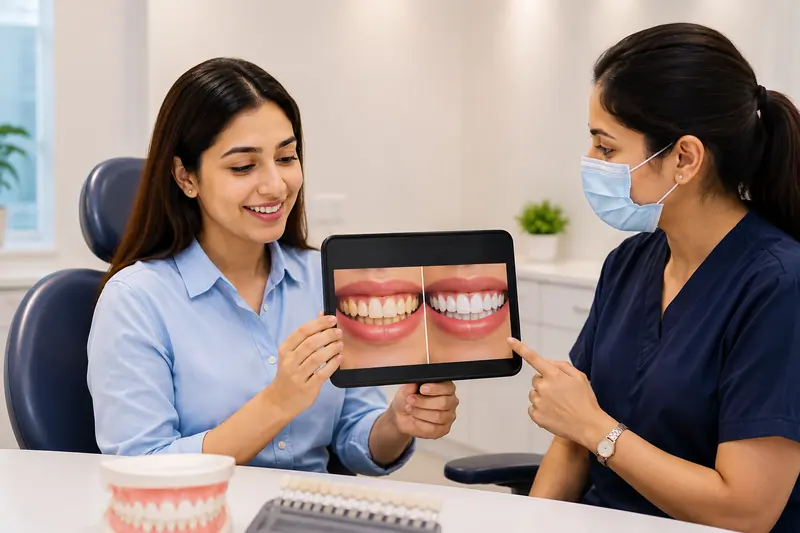
Yes, teeth whitening strips can work, particularly on natural teeth with yellowing or stains that respond to peroxide-based bleaching. They are not automatically a waste of money. However, results depend on the cause of discoloration, the whitening ingredient and concentration, how consistently the strips are used, and whether the teeth contain crowns, fillings or other restorations.
Whitening strips also have limitations. They may cause temporary sensitivity or gum irritation, and they cannot correct every type of discoloration. American Dental Association
How Do Teeth Whitening Strips Work?
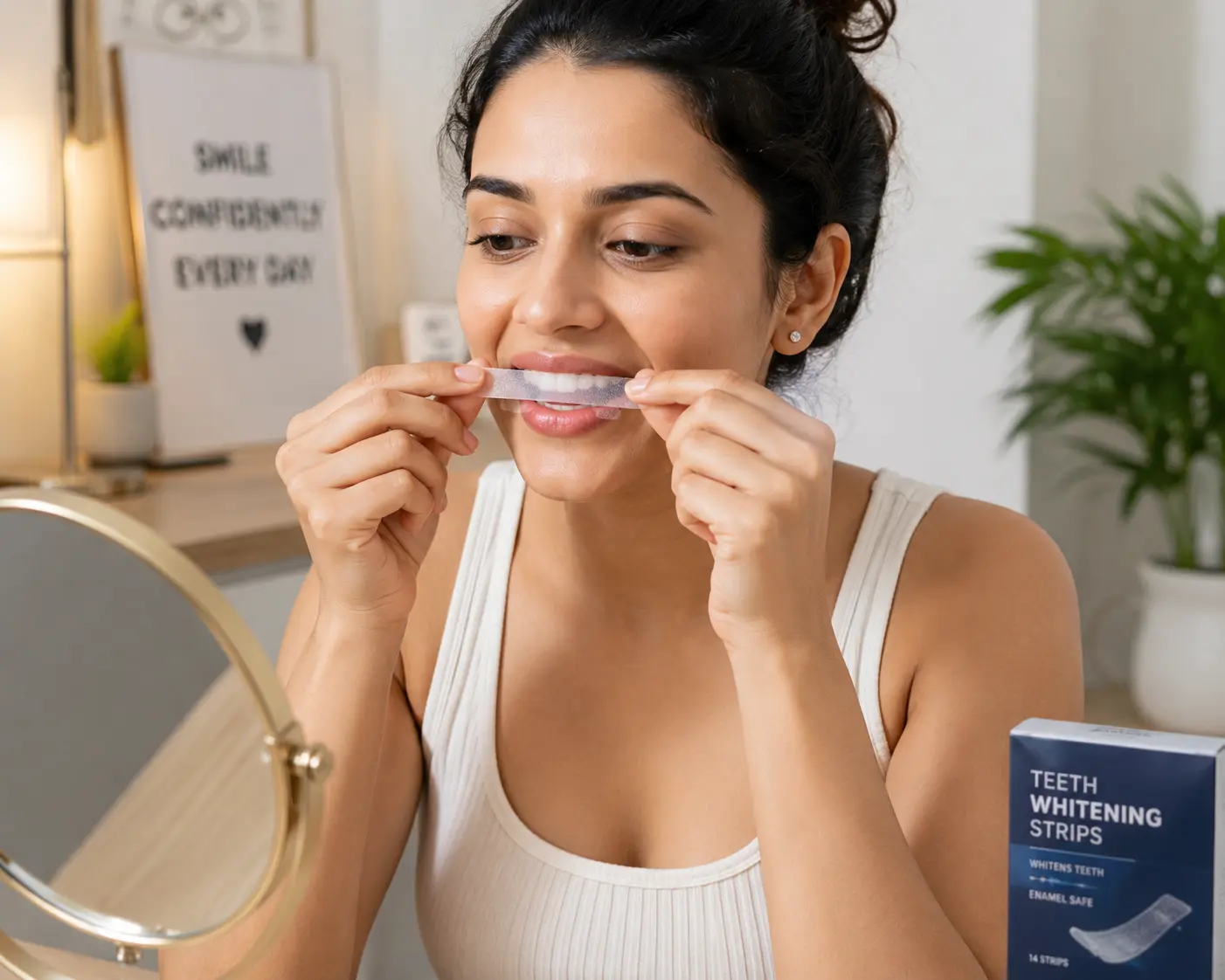
Most conventional whitening strips use hydrogen peroxide or another peroxide-based bleaching agent.
The strip keeps the whitening ingredient in contact with the tooth surface for a specified period. Peroxide penetrates dental hard tissues and changes the molecules responsible for some types of discoloration, making the teeth appear lighter. American Dental Association
Whitening strips are different from whitening toothpastes. Whitening toothpastes mainly remove surface stains through polishing ingredients, while peroxide-based strips can produce a chemical bleaching effect.
This is why a strip may lighten the natural colour of a tooth more noticeably than an ordinary whitening toothpaste.
Do Teeth Whitening Strips Actually Work?
Yes. Research indicates that over-the-counter whitening strips can produce measurable short-term tooth whitening.
A systematic review comparing whitening strips with dentist-supervised home bleaching found that strips could produce meaningful colour change, although dentist-supervised treatment achieved somewhat greater instrument-measured whitening in some comparisons. The difference was not always noticeable to the naked eye. PubMed
A more recent systematic review of over-the-counter bleaching products also found satisfactory short-term whitening effects, while noting that the overall certainty of evidence was limited. PubMed
So whitening strips are not simply a marketing gimmick—but they are also not equivalent to every professional whitening system.
Do Whitening Strips Work on Yellow Teeth?
They may work well on yellow natural teeth, particularly when the colour responds to peroxide bleaching.
However, “yellow teeth” can mean several different things.
Teeth may look yellow because of:
- Natural dentin colour
- Age-related changes
- Tea, coffee or tobacco staining
- Thinner enamel
- Plaque or tartar
- Developmental discoloration
- Previous dental treatment
Whitening may improve some intrinsic and extrinsic discoloration, but the response varies depending on the cause. American Dental Association
If the yellow appearance is actually caused by tartar or heavy surface deposits, professional cleaning may be more appropriate than bleaching.
When Do Whitening Strips Not Work Well?
Whitening strips only change the colour of natural tooth structure.
They do not whiten:
- Crowns
- Veneers
- Tooth-coloured fillings
- Dental implants
This can create a colour mismatch if natural teeth become lighter while restorations remain unchanged. American Dental Association
Whitening strips may also be less predictable for teeth affected by certain developmental stains, trauma or internal discoloration.
A single dark tooth should not simply be treated with whitening strips without first understanding why its colour changed.
Do Whitening Strips Damage Teeth?
When an appropriate whitening product is used as directed, whitening is generally considered an established cosmetic dental procedure. The most common problems are temporary tooth sensitivity and gum irritation. American Dental Association
Problems become more likely when products are:
- Used more frequently than directed
- Left on for too long
- Combined with several bleaching products
- Allowed to repeatedly contact the gums
- Used despite untreated dental problems
Whitening strips should therefore not be treated as a “more is better” product.
What Are the Negatives of Whitening Strips?
Possible disadvantages include:
Tooth sensitivity: Teeth may temporarily become more sensitive to cold, air or sweet foods.
Gum irritation: Peroxide gel touching the gums can cause temporary irritation.
Uneven whitening: Crowded teeth or strips that do not adapt evenly may produce inconsistent results.
Restorations remain unchanged: Fillings, crowns and veneers do not bleach.
Temporary results: Teeth may gradually darken again depending on diet, smoking, oral hygiene and natural ageing.
The ADA identifies tooth sensitivity and gingival irritation as the most common adverse effects of whitening. American Dental Association
Are Whitening Strips Safe to Use Every Day?
They should be used only according to the manufacturer's instructions or professional advice.
Some whitening-strip systems are designed for daily use during a limited treatment course. That does not mean strips should be used continuously every day for months.
Do not increase the frequency, duration or number of applications simply to obtain faster results.
If sensitivity becomes significant or the gums become irritated, stop using the product and discuss the symptoms with a dentist.
Will Whitening Strips Work After One Use?
A single use may produce little or no obvious visible change.
Whitening generally develops over repeated applications. Studies of peroxide strips have demonstrated progressively greater colour change over treatment periods rather than an instant permanent result after one application. PubMed
How quickly changes become visible depends on the product, original tooth shade and type of discoloration.
Claims that every patient will achieve dramatic whitening after one treatment should be viewed cautiously.
Do Whitening Strips Work Permanently?
No. Teeth whitening is not permanent.
Even after successful whitening, natural teeth can gradually darken again because of ageing and exposure to pigments from foods, drinks and tobacco.
Coffee, tea, red wine and smoking can contribute to new staining. American Dental Association
Good oral hygiene and reducing frequent exposure to staining substances may help maintain the result longer.
Repeated whitening should still follow product instructions or professional guidance rather than being performed continuously.
What Is the Healthiest Way to Whiten Teeth?
There is no one whitening method that is healthiest for every person.
The safest starting point is to first determine why the teeth are discoloured and whether the mouth is healthy enough for bleaching.
A dental assessment can identify:
- Cavities
- Gum inflammation
- Cracks
- Significant sensitivity
- Existing restorations
- A single internally discoloured tooth
- Tartar or stains better treated with cleaning
The ADA notes that a dental examination before bleaching can help identify the cause of discoloration and factors that may affect treatment success. American Dental Association
Dentist-supervised whitening also allows the technique and concentration to be selected according to the patient's teeth and sensitivity risk.
Should Children or Teenagers Use Whitening Strips?
Whitening in younger patients needs additional caution.
The American Academy of Pediatric Dentistry discourages full-arch cosmetic bleaching in children with primary or mixed dentition and recommends that whitening for young patients form part of an individualised treatment plan. AAPD
Parents should therefore avoid treating a child's tooth colour as a cosmetic problem without first having the teeth assessed.
Permanent teeth also naturally appear more yellow than baby teeth in many children, particularly while both are present in the mouth.
Whitening Strips vs Professional Whitening
| Feature | Whitening strips | Dentist-supervised whitening |
|---|---|---|
| Convenience | High | Requires professional involvement |
| Cost | Usually lower | Usually higher |
| Customisation | Limited | Greater |
| Gum protection | Depends on correct application | Can be professionally managed |
| Speed | Usually gradual | May be faster |
| Restorations assessment | No | Yes |
| Suitable for all discoloration? | No | Also depends on diagnosis |
Professional whitening is not automatically necessary for everyone. For suitable adults with healthy natural teeth, a reputable whitening strip may be a practical cosmetic option.
Conclusion
So, do teeth whitening strips actually work or are they a waste of money? For suitable natural teeth, peroxide-based strips can produce real whitening and may be a reasonable lower-cost cosmetic option.
They are less useful when discoloration comes from restorations, tartar, trauma or conditions that need diagnosis. Results are not permanent, and sensitivity or gum irritation can occur.
The best whitening approach starts with understanding the cause of the colour change rather than simply choosing the strongest product.
If you are considering whitening strips but have sensitive teeth, fillings, crowns, uneven discoloration or persistent yellowing, a dental examination can help determine whether bleaching, professional cleaning or another approach is more appropriate.
Patients in Faridabad and Delhi NCR can consult Little Bites Dental Clinic for an assessment before choosing a whitening option.
Related Reading
Are yellow teeth healthy? · Professional teeth cleaning in Faridabad · Dentist-recommended toothpaste guide · Oral health essentials
References
- American Dental Association
- AAPD
- Whitening strips vs supervised bleaching: systematic review
- 2024 systematic review of OTC bleaching products
- Peroxide whitening strips: clinical study
- NHS: teeth whitening
Clinic: Little Bites Dental Clinic, Faridabad
Medical disclaimer: This article provides general educational information and does not replace an individual dental examination, diagnosis or personalised treatment plan.