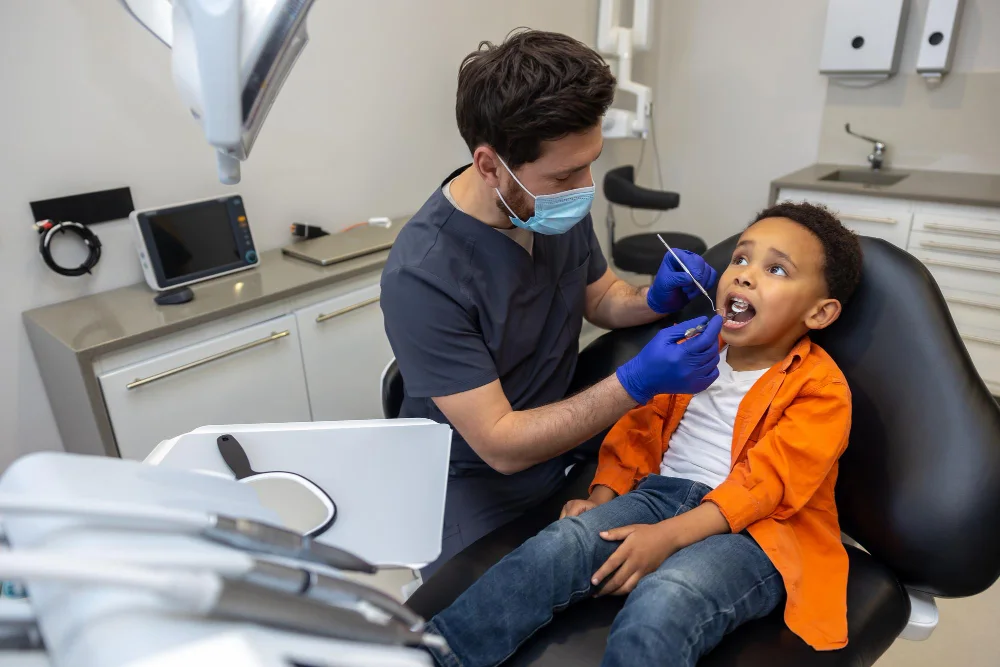
Dental treatment can feel overwhelming for children, anxious adults, and people with difficult past dental experiences. Fear of injections, unfamiliar sounds, a strong gag reflex, or long procedures can make necessary care stressful.
Conscious sedation dentistry can help suitable patients feel calmer and more relaxed while treatment is carried out safely. For families and patients in Faridabad and Delhi NCR, the right approach depends on age, medical history, anxiety level, treatment complexity, and ability to cooperate.
What Is Conscious Sedation Dentistry?
Conscious sedation dentistry uses medication or inhaled gases to reduce fear, anxiety, and awareness during dental treatment while maintaining a level of consciousness appropriate to the chosen technique.
Depending on the depth of sedation, a patient may feel relaxed, sleepy, or less aware of the procedure while still being able to respond to verbal instructions.
Conscious sedation should not be confused with general anaesthesia. Under general anaesthesia, the patient is unconscious. With minimal or moderate sedation, the patient is generally still responsive, although coordination, memory, and awareness may be reduced.
Local anaesthesia may still be required. Sedation helps manage anxiety and comfort, while local anaesthetic numbs the tooth or surrounding tissues.
Why Do Some Patients Need Sedation for Dental Treatment?
Dental anxiety exists on a spectrum. Some people feel mildly nervous before an appointment, while others postpone treatment because of significant fear.
- Significant dental anxiety or fear
- Difficulty cooperating because of age or developmental factors
- A strong gag reflex
- Previous traumatic dental experiences
- Difficulty remaining still for treatment
- Special healthcare needs that make routine dental care challenging
- A lengthy or complex dental procedure
- Anxiety related to needles, instruments, sounds, or dental environments
For children, sedation should not simply be used for convenience. Pediatric treatment planning should consider communication, behaviour guidance, the child's developmental level, and the treatment need before pharmacological techniques are selected.
Types of Conscious Sedation Used in Dentistry
Nitrous Oxide and Oxygen Sedation
Nitrous oxide mixed with oxygen is commonly used to reduce anxiety during dental treatment. The patient breathes the gas through a small nasal mask.
Patients may feel calm, light, warm, or slightly sleepy. The effect begins and wears off relatively quickly. Nitrous oxide and oxygen are widely used for anxiety control in pediatric dentistry when clinically appropriate.
Oral Sedation
Some patients may receive a sedative medicine by mouth before treatment. The degree of sedation can vary depending on the medicine, dose, age, individual response, and whether other medicines are being used.
Intravenous Sedation
Intravenous, or IV, sedation is delivered through a vein. The patient usually becomes deeply relaxed and drowsy but may remain able to communicate and respond at conscious sedation levels.
IV sedation requires appropriate training, patient assessment, monitoring, and recovery arrangements. It is different from general anaesthesia.
Dental anxiety making treatment difficult?
Book a consultation at Little Bites Clinic to discuss behaviour guidance, nitrous oxide, and suitable sedation options.
WhatsApp UsIs Conscious Sedation Dentistry Safe?
When sedation is appropriately selected, administered, monitored, and supported by trained professionals, it can help manage dental anxiety and facilitate necessary treatment. However, sedation is a medical procedure and is not completely risk-free.
- Nausea or vomiting
- Drowsiness, dizziness, or headache
- Changes in breathing or oxygen levels
- Unexpectedly deeper sedation than intended
- Medication-related reactions
- Delayed recovery in some patients
Safe care depends on medical history, pre-sedation assessment, fasting instructions when required, monitoring, emergency preparedness, and recovery criteria. Children require particular attention because sedation can become deeper than intended.
When Is Conscious Sedation Recommended for Children?
A child who cries, feels nervous, or needs reassurance does not automatically need sedation. Pediatric dentists typically begin with age-appropriate communication and behaviour guidance.
Sedation may be considered when fear, limited cooperation, developmental needs, medical conditions, or the amount of required treatment makes routine dental care difficult.
- Severe dental anxiety
- Inability to tolerate treatment despite behavioural support
- Multiple or complex procedures
- Special healthcare needs
- An upsetting previous dental experience
- Inability to remain still enough for safe treatment
The final decision should follow a professional clinical assessment rather than a parent choosing a sedation method independently.
What Should Parents Expect Before Sedation?
Before a child receives sedation, the dental team should review medical history, current medicines, allergies, previous reactions to sedation or anaesthesia, respiratory problems, recent illness, and the planned dental procedure.
- Disclose medicines, allergies, previous hospitalisations, respiratory or heart conditions, seizures, and recent fever, cough, cold, or congestion.
- Follow eating and drinking instructions exactly because requirements vary by sedation method and patient.
- Ask who will administer and monitor sedation, what equipment will be used, and what recovery should look like.
What Happens During Conscious Sedation Dentistry?
The exact experience depends on the sedation method. With nitrous oxide and oxygen, the patient usually breathes through a nasal mask while remaining responsive. Treatment begins once the patient is comfortable and the dentist determines that the desired effect has been achieved.
With oral or IV sedation, the patient may become more drowsy. Monitoring requirements depend on the depth of sedation and can include assessment of breathing, oxygen saturation, heart rate, blood pressure, responsiveness, and other parameters.
The dentist may also use local anaesthesia to numb the treatment area. Sedation does not necessarily replace local anaesthetic because reducing anxiety and controlling dental pain are different clinical goals.
What Happens After Dental Sedation?
Recovery depends on the medication and depth of sedation. Nitrous oxide alone often wears off relatively quickly, while oral or IV sedatives may cause drowsiness or impaired coordination for longer.
Patients should leave only after appropriate recovery criteria have been met. An adult escort and temporary activity restrictions may be required with certain types of sedation.
Always follow the treating dental team's discharge instructions rather than relying on general advice online.
Benefits of Conscious Sedation Dentistry
Reduced Dental Anxiety
Sedation can help people who would otherwise struggle to enter the clinic, sit in the dental chair, or tolerate necessary procedures.
Better Cooperation During Treatment
A calmer patient may find it easier to remain still and follow instructions, helping the dentist carry out treatment efficiently and safely.
Improved Tolerance of Longer Procedures
Some dental procedures require more chair time. Sedation may make longer appointments easier for selected patients to tolerate.
Support for Patients With Special Healthcare Needs
Some patients with sensory, developmental, behavioural, or medical challenges may benefit from carefully planned sedation when conventional behaviour guidance alone is insufficient.
Risks and Limitations
Sedation is not suitable for every patient. A dentist may postpone or modify sedation because of respiratory illness, medical concerns, fasting status, medication interactions, or other factors that could increase risk.
Nasal congestion can also interfere with nitrous oxide delivery because the patient needs to breathe effectively through the nose.
Sedation can occasionally become deeper than intended. Appropriate monitoring, trained personnel, airway equipment, oxygen availability, and emergency protocols are important safety requirements.
Conscious Sedation vs General Anaesthesia
With conscious sedation, the aim is to reduce anxiety and awareness while maintaining an appropriate level of responsiveness. General anaesthesia produces unconsciousness and requires a different level of anaesthetic management and monitoring.
The appropriate choice depends on the patient, treatment required, medical status, cooperation level, and professional assessment.
How Dentists Decide Whether Sedation Is Appropriate
A responsible sedation plan begins with assessment rather than medication. The dentist considers age, developmental level, dental anxiety, communication, cooperation, medical conditions, current medicines, airway factors, previous sedation history, treatment type, and whether care can be completed with behaviour guidance and local anaesthesia alone.
For children, treatment planning should balance immediate dental needs with the goal of developing a healthy long-term relationship with dentistry.
Expert Recommendations for Parents and Patients
- Focus on understanding the clinical plan rather than requesting a particular medicine.
- Choose a dental team that reviews medical history and explains alternatives and risks.
- Follow pre-treatment and post-treatment instructions carefully.
- Report a child's recent illness before the appointment.
- Do not give medication before the visit unless instructed by the treating clinician.
- For anxious children, keep explanations simple and avoid frightening descriptions.
Conscious Sedation Dentistry in Faridabad and Delhi NCR
Patients searching for conscious sedation dentistry in Faridabad or Delhi NCR are often looking for a way to receive necessary dental treatment without overwhelming fear or distress.
At Little Bites Dental Clinic, the appropriate starting point is a detailed dental and medical assessment. The dentist can evaluate anxiety, cooperation, oral health needs, medical status, and treatment complexity before discussing which behaviour-management or sedation approach may be suitable.
Sedation should always be individualised. A technique that works well for one child or adult may not be the right option for another.
Conclusion
Conscious sedation dentistry can make necessary dental treatment more manageable for selected children and adults who experience significant anxiety, difficulty cooperating, a strong gag reflex, special healthcare needs, or difficulty tolerating longer procedures.
It is not a one-size-fits-all solution. Safe sedation begins with careful patient selection, complete medical history, appropriate treatment planning, suitable monitoring, trained professionals, and clear recovery instructions.
If you are in Faridabad or Delhi NCR and dental anxiety is making treatment difficult for you or your child, schedule a consultation with Little Bites Dental Clinic. A professional assessment can help determine the most appropriate and comfortable approach to dental care.
Book a conscious sedation consultation
Discuss dental anxiety, treatment needs, and suitable options for making your or your child's dental visit more comfortable.
WhatsApp UsAuthor and medical reviewer: Dr. Nikitaa Dhingra Sanan
Clinic: Little Bites Dental Clinic, Faridabad
Last medically reviewed: 16 August 2026
Medical disclaimer: This article provides general educational information. It does not replace an individual examination, diagnosis or treatment plan from a qualified dentist or healthcare professional.