Brushing and flossing are not competing habits—they clean different areas of your mouth. Brushing twice daily with fluoride toothpaste is the foundation of daily oral hygiene, while floss or another suitable interdental cleaner helps remove plaque from spaces a toothbrush cannot clean effectively.
So, if you are comparing brushing vs. flossing, the practical answer is not to choose one over the other. A complete daily routine includes both surface cleaning and cleaning between the teeth. Current ADA guidance recommends brushing twice daily and cleaning between teeth every day. For a wider look at common dental problems and their causes, see our guide to oral health essentials.
Brushing vs. Flossing: What Is the Difference?
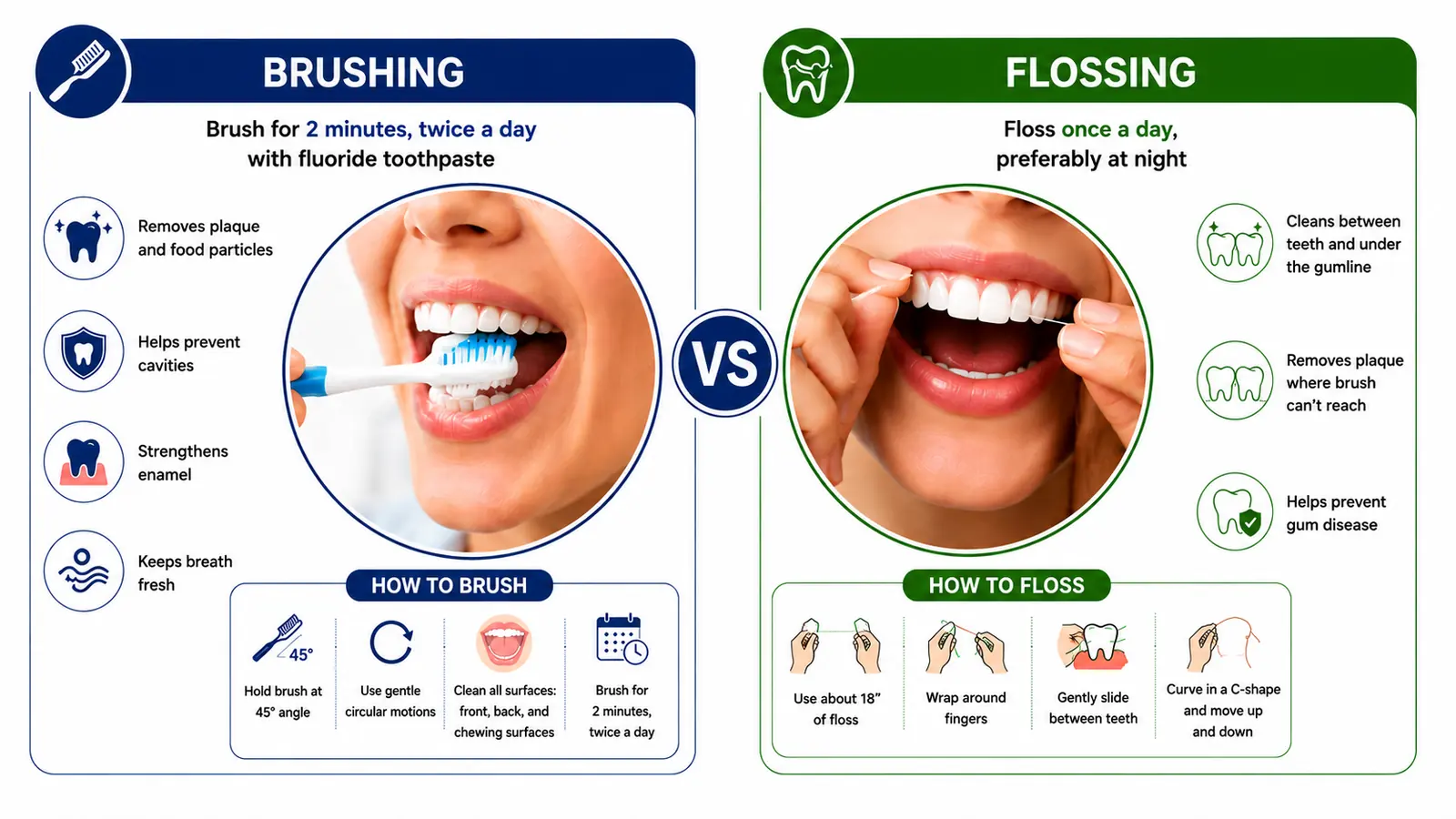
Brushing and interdental cleaning both help control dental plaque, but they reach different areas.
| Brushing | Floss / Interdental Cleaning | |
|---|---|---|
| Main area cleaned | Outer, inner and chewing surfaces | Spaces between teeth |
| Usual frequency | Twice daily | Once daily |
| Fluoride exposure | Yes, with fluoride toothpaste | Not its primary purpose |
| Plaque removal | Most accessible surfaces | Interdental areas |
| Can replace the other? | No | No |
Brushing should therefore not be considered a substitute for cleaning between teeth—and flossing should not replace brushing.
What Does Brushing Do?
Brushing is the foundation of daily home dental care. It physically disrupts plaque from accessible tooth surfaces and around the gumline.
Using fluoride toothpaste adds another important benefit: fluoride helps protect tooth enamel and supports remineralisation of early mineral loss. Our dentist-recommended toothpaste guide explains how to choose the right one.
For most people, a good brushing routine includes:
- Brushing twice daily
- Brushing for about two minutes
- Using fluoride toothpaste
- Using a soft-bristled manual or powered toothbrush
- Cleaning the outer, inner and chewing surfaces
- Brushing gently around the gumline
Both manual and powered toothbrushes can remove plaque effectively when used properly. If you are considering a powered brush, our best electric toothbrush guide 2026 covers what to look for. The limitation is that toothbrush bristles do not reliably clean all the narrow contact areas between neighbouring teeth.
What Does Flossing Do?
Flossing helps remove plaque and food debris from between teeth and close to the gumline, areas that may be difficult to reach with a toothbrush.
Daily interdental cleaning can support gum health and complement toothbrushing. Current ADA guidance also recognises that traditional string floss is not the only option; different interdental devices may be useful depending on the person's teeth, dental work and periodontal condition.
Options can include:
- String floss
- Interdental brushes
- Water flossers
- Floss picks
- Floss threaders for bridges or orthodontic appliances
The goal is not simply to “use floss.” The goal is to effectively clean between the teeth every day.
Want to know if your brushing and flossing technique is effective?
Book a checkup at Little Bites Clinic, Sector 29, Faridabad — our team will assess your technique and recommend improvements.
WhatsApp UsBrushing vs. Flossing: Which Is More Important?
Brushing and interdental cleaning serve different purposes, so professional guidance generally recommends doing both rather than ranking one as universally more important.
Brushing with fluoride toothpaste remains central because it cleans a large proportion of accessible tooth surfaces and provides fluoride exposure. Interdental cleaning adds plaque removal in areas brushing may miss.
Some articles frame the issue as, “If you could only choose one, which should it be?” Healthline, for example, includes a dentist's opinion that correctly performed flossing would be the choice in that hypothetical situation. That should be understood as an individual clinical opinion rather than a universal guideline telling patients to floss instead of brush.
In normal daily life, there is little benefit in choosing between them. Brush properly and clean between your teeth consistently.
Is It Worse to Skip Brushing or Flossing?
Regularly skipping either step leaves part of your oral-care routine incomplete.
If you skip brushing, plaque remains on many accessible tooth surfaces and you miss the regular fluoride exposure provided by toothpaste.
If you brush but never clean between your teeth, plaque may remain in tight interdental spaces even when the visible surfaces look clean.
Missing one session occasionally is different from routinely ignoring one part of oral hygiene. What matters most is the habit you maintain over months and years.
Should You Floss Before or After Brushing?
Either sequence can work if you clean thoroughly. However, flossing before brushing may offer some practical advantages.
The American Association of Orthodontists favours flossing first because removing plaque and debris beforehand may help fluoride toothpaste reach cleaned interdental areas more effectively. Penn Dental similarly notes this potential advantage while also citing the ADA position that either sequence is acceptable when the cleaning itself is thorough.
A practical routine can therefore be:
- Clean between the teeth.
- Brush for two minutes with fluoride toothpaste.
- Spit out excess toothpaste.
But if brushing first makes it more likely that you consistently complete both steps, there is no reason to abandon that routine simply because of the order. Consistency and technique matter more than obsessing over which comes first.
How Often Should You Brush and Floss?
For most people:
Brushing
- Twice daily
- Around two minutes each time
- With fluoride toothpaste
Interdental Cleaning
- Once daily
- Using floss or another suitable interdental cleaner
There is no requirement that flossing must happen specifically at bedtime. Choose a time that you can realistically maintain every day.
Before-bed brushing is particularly important because it ensures your teeth are cleaned before a long overnight period without eating or routine oral cleaning.
How Do You Floss Correctly?
Good technique is more important than simply passing floss between the teeth.
Guide the floss gently through the contact point rather than snapping it into the gums. Curve the floss around one tooth in a C shape, then move it gently up and down against the tooth surface. Repeat the movement against the neighbouring tooth before moving to the next space.
Using a clean section of floss as you progress can make the routine more hygienic. Penn Dental and Healthline both emphasise cleaning along the side of each tooth rather than simply moving floss straight between the contact points.
What If Traditional Floss Is Difficult to Use?
You do not have to force yourself to use string floss if another interdental tool works better for your mouth.
Depending on your dental anatomy and treatment history, a dentist may suggest:
- Floss for tight contacts
- Interdental brushes for wider spaces
- Water flossers when string floss is difficult to manage
- Floss threaders around bridges or braces
- Floss picks when they improve consistency
The ADA encourages dentists to discuss different interdental devices rather than assuming the same method will work for every patient.
What About Brushing and Flossing With Braces?
Braces create additional spaces around brackets and wires where food and plaque can collect. Patients with orthodontic appliances may find floss threaders, interdental brushes, orthodontic flossers or water flossers easier to use than standard floss alone.
AAO specifically highlights these tools for cleaning around orthodontic appliances. Your dentist or orthodontist can recommend a technique based on the type of appliance and the spaces that are hardest for you to clean.
When Should Children Start Flossing?
Children can begin interdental cleaning when neighbouring teeth touch closely enough that a toothbrush cannot adequately clean between them. Young children usually need help from a parent or caregiver because flossing requires coordination.
A simple routine works best: Brush → clean between touching teeth → make it part of the same daily habit.
Parents do not need to turn flossing into a complicated procedure. The aim is to build a consistent routine without making oral hygiene stressful. Our guide to pediatric dentistry in Faridabad explains what to expect at your child's dental visits.
Why Do My Gums Bleed When I Floss?
Bleeding gums may occur when plaque-related inflammation is present. It may also happen if floss is snapped forcefully into the gum tissue.
Do not assume that bleeding means you should permanently stop cleaning between the teeth. Persistent bleeding deserves assessment, particularly when accompanied by:
- Swollen or red gums
- Gum recession
- Persistent bad breath
- Loose teeth
- Pain
- Pus or swelling
A dental examination can help distinguish gingivitis, technique-related trauma and other causes. To understand when a gum specialist may be involved, read what is a periodontist.
Expert Insight
— Dr. Nikitaa Dhingra Sanan, Little Bites Dental Clinic, Faridabad
Common Brushing and Flossing Mistakes
Common brushing mistakes
- Brushing too aggressively
- Using excessive pressure
- Rushing through brushing
- Missing the gumline
- Repeatedly missing back teeth
- Continuing to use badly worn toothbrush bristles
Common flossing mistakes
- Snapping floss into the gums
- Only flossing when food gets stuck
- Skipping back teeth
- Moving floss through the contact without cleaning the sides of the teeth
- Giving up because string floss feels difficult instead of trying another interdental tool
A simple routine performed properly every day is usually more useful than a complicated routine that is difficult to maintain.
Conclusion
When comparing brushing vs. flossing, the most useful answer is that they are complementary parts of the same oral-care routine.
Brush twice daily with fluoride toothpaste to clean accessible tooth surfaces and provide fluoride protection. Clean between the teeth every day using floss or another suitable interdental cleaner.
Flossing before brushing may have practical advantages, but either order can work when the technique is thorough and the routine is consistent.
Good oral hygiene is not about choosing the “winner.” It is about cleaning the areas that each method reaches.
If your gums bleed regularly, plaque keeps building up, or you are unsure whether your brushing and interdental-cleaning technique is effective, a dental examination can help identify the areas your home-care routine may be missing.
Patients in Faridabad and Delhi NCR can visit Little Bites Dental Clinic for preventive dental assessment, professional teeth cleaning in Faridabad and personalised oral-hygiene guidance.
References
- American Dental Association — Dental Floss/Interdental Cleaners
- American Dental Association — Home Oral Care
- American Association of Orthodontists — Should You Brush or Floss First?
- Penn Dental Family Practice — Is It Better to Brush First or Floss First?