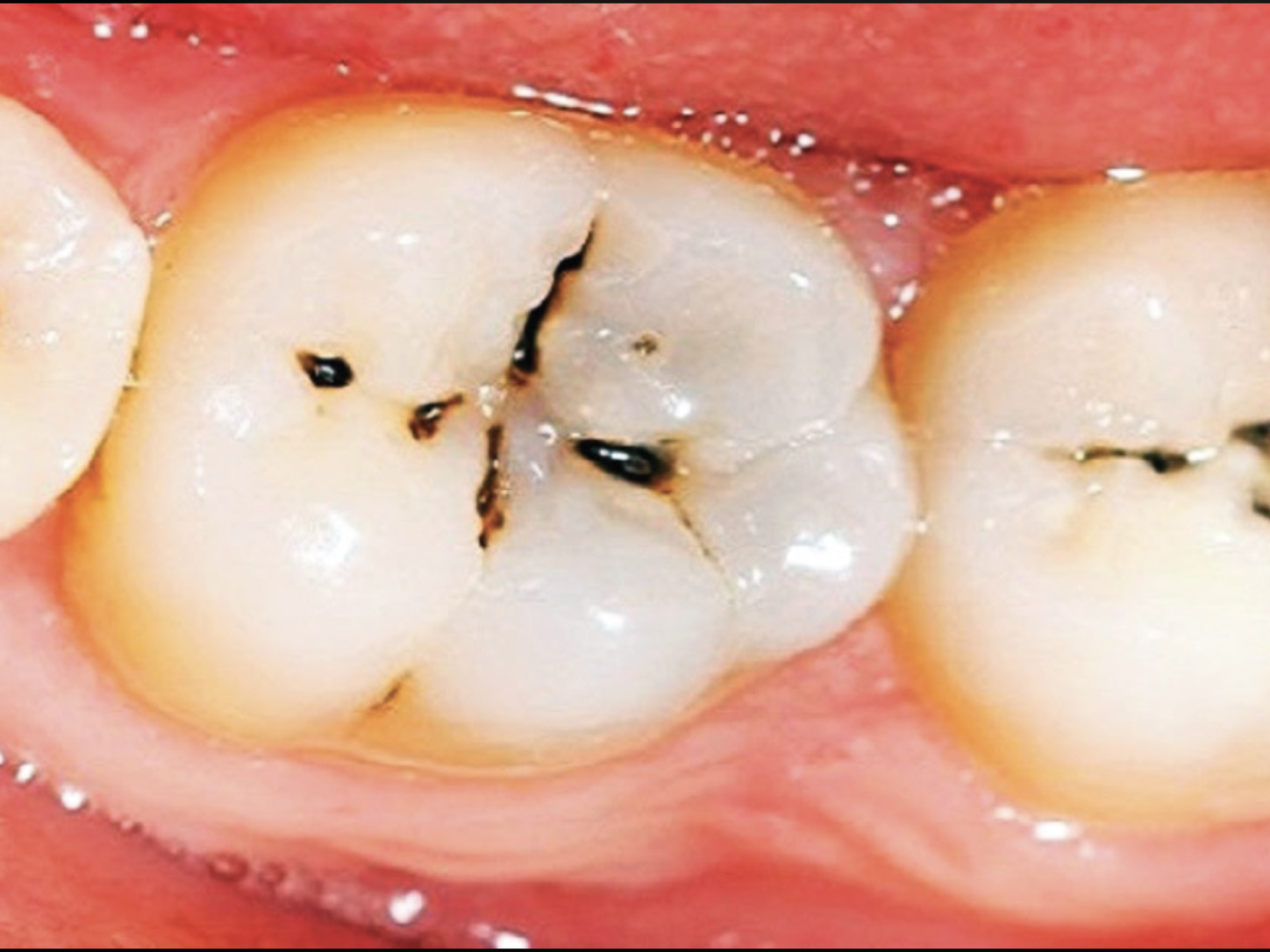
No — ordinary tooth decay is not caused by worms living inside teeth. "Tooth worm" is an old explanation for toothache and cavities, while "keeda in teeth" is still sometimes used informally in India for dental decay.
Modern dentistry shows that cavities develop when bacteria in dental plaque use sugars and starches to produce acids that remove minerals from tooth enamel.
This guide explains what the tooth-worm theory meant, what actually causes tooth decay, which symptoms people may mistake for "worms," and how the problem is treated.
Are Tooth Worms Real?
No. A tooth worm is not a recognised cause of dental cavities.
Historical research shows that people in several cultures once believed a small worm lived inside diseased teeth and caused toothache and decay. As scientific knowledge developed, this explanation was abandoned.
Today, dental caries is understood as a disease process involving bacterial plaque, diet, acid production, saliva, fluoride exposure, and the tooth surface. A cavity is therefore not a tunnel created by a worm.
This distinction matters because attempts to "kill" or "pull out" a supposed worm may delay treatment of the actual dental problem.
What Is the Tooth Worm Theory?
The tooth worm theory was an ancient belief that a small creature living inside a tooth caused tooth pain, cavities, and sometimes other oral problems.
Historical medical literature indexed in PubMed records versions of this belief across different cultures and periods. By the Enlightenment, physicians increasingly regarded the idea as superstition rather than a biological explanation for dental disease.
The belief probably persisted because people could see holes in badly damaged teeth long before bacteria, plaque biofilms, enamel demineralisation, and dental-pulp disease were understood.
What Actually Causes "Keeda" in Teeth?
What people commonly call keeda in teeth is usually tooth decay, also called dental caries. Bacteria in dental plaque use sugars and starches from foods and drinks and produce acids. Repeated acid exposure removes minerals from enamel.
Early decay may first appear as a white area where minerals have been lost. At this stage, the process may sometimes be stopped or reversed before a physical cavity develops.
If mineral loss continues, the enamel can break down and form a hole. Decay may then progress into the dentin and eventually approach the dental pulp, where the nerves and blood vessels are located.
Common factors that can increase cavity risk include frequent sugary foods or drinks, inadequate plaque removal, dry mouth, exposed tooth roots, and insufficient fluoride protection.
What Symptoms Are Mistaken for Tooth Worms?
There are no specific "tooth worm symptoms" because ordinary cavities are not caused by worms.
Symptoms usually come from tooth decay or infection and may include:
- White, brown, or black changes on a tooth
- A visible hole or rough area
- Sensitivity to sweet, cold, or hot foods
- Pain while biting or chewing
- Spontaneous or throbbing toothache
- Food repeatedly becoming trapped
- Swelling near a tooth
- Pus, a gum boil, or an unpleasant taste
Early tooth decay may cause no symptoms at all. As decay progresses, pain and temperature sensitivity become more likely.
How Is "Keeda in Teeth" Treated?
There is no worm to kill or remove. Treatment depends on how far the tooth decay has progressed.
| Stage | Possible dental approach |
|---|---|
| Early mineral loss, no physical cavity | Fluoride, plaque control and management of dietary/risk factors |
| Established cavity | Removal of decayed tooth tissue and a filling |
| Pulp irreversibly inflamed or infected | Root canal treatment may be considered if the tooth can be restored |
| Tooth too severely damaged to save | Extraction may sometimes be necessary |
Early decay may respond to fluoride, while a formed cavity is commonly treated by removing damaged tissue and restoring the tooth with a filling.
A toothache alone does not prove that root canal treatment is required. Dental examination, pulp testing, and X-rays may be needed to identify the source of pain.
— Dr. Nikitaa Dhingra Sanan, Little Bites Dental Clinic, Faridabad
The same principle applies when someone describes "keeda": first identify whether the problem is early decay, an established cavity, pulp disease, gum disease, or another condition.
Can You Remove a Tooth Worm Naturally at Home?
No. Home remedies cannot remove a tooth worm because an ordinary cavity does not contain one. They also cannot rebuild tooth structure after a true cavity has formed.
Fluoride toothpaste, effective brushing, interdental cleaning, and reducing frequent sugar exposure can help prevent decay and support remineralisation of very early lesions.
Salt-water rinses or other comfort measures may temporarily ease symptoms, but they do not repair an established cavity.
Avoid putting acids, caustic chemicals, powders, or unverified substances directly into a painful tooth. Temporary pain relief should not replace diagnosis.
Not sure what's causing your toothache?
A dental exam can identify the real cause — decay, pulp disease, or gum disease — and the right next step.
Book on WhatsAppWhat About Worms in the Gums?
Bleeding, swelling, pus, or a crawling sensation in the gums usually does not mean worms are present. Gum disease, a dental abscess, trapped debris, or another oral condition is much more likely.
There is, however, a completely separate and rare condition called oral myiasis, in which fly larvae infest oral tissues. Published medical literature describes it as an unusual condition and not the cause of routine cavities.
If actual moving larvae or organisms are visible inside the mouth, seek prompt professional medical or dental assessment rather than attempting to remove them at home.
How Can You Prevent Tooth Decay?
Brush twice daily with fluoride toothpaste, clean between the teeth regularly, and limit frequent exposure to sugary or starchy snacks and drinks.
Fluoride helps protect enamel and can support repair of very early mineral loss before a cavity forms.
Dry mouth should also be discussed with a dentist because reduced saliva can increase susceptibility to decay.
Arrange a dental assessment if you notice a visible cavity, recurring pain, persistent sensitivity, tooth darkening, swelling, or a broken tooth.
Facial swelling, fever, rapidly increasing swelling, or difficulty swallowing or breathing can indicate a more serious infection and requires urgent assessment.
Conclusion
Are tooth worms real? Not as a cause of ordinary tooth decay.
What many people call "keeda in teeth" is usually dental caries caused by plaque bacteria and repeated acid attacks on the tooth.
The appropriate treatment depends on whether the problem is early mineral loss, an established cavity, pulp disease, infection, or severe structural damage. Treating the actual diagnosis is more useful than trying to remove a supposed "worm."
Sources / References
- National Institute of Dental and Craniofacial Research — Tooth Decay
- NIDCR — The Tooth Decay Process
- PubMed — The Tooth-Worm: Historical Aspects of a Popular Medical Belief
- CDC — About Cavities (Tooth Decay)
- PubMed — Oral Myiasis Literature Review
- NHS — Dental Abscess
Author / Medical reviewer: Dr. Nikitaa Dhingra Sanan, BDS, MDS - Pediatric Dentist
Clinic: Little Bites Dental Clinic, Faridabad
Last reviewed: September 2026
Medical disclaimer: This article provides general educational information and does not replace an individual dental examination, diagnosis or personalised treatment plan.