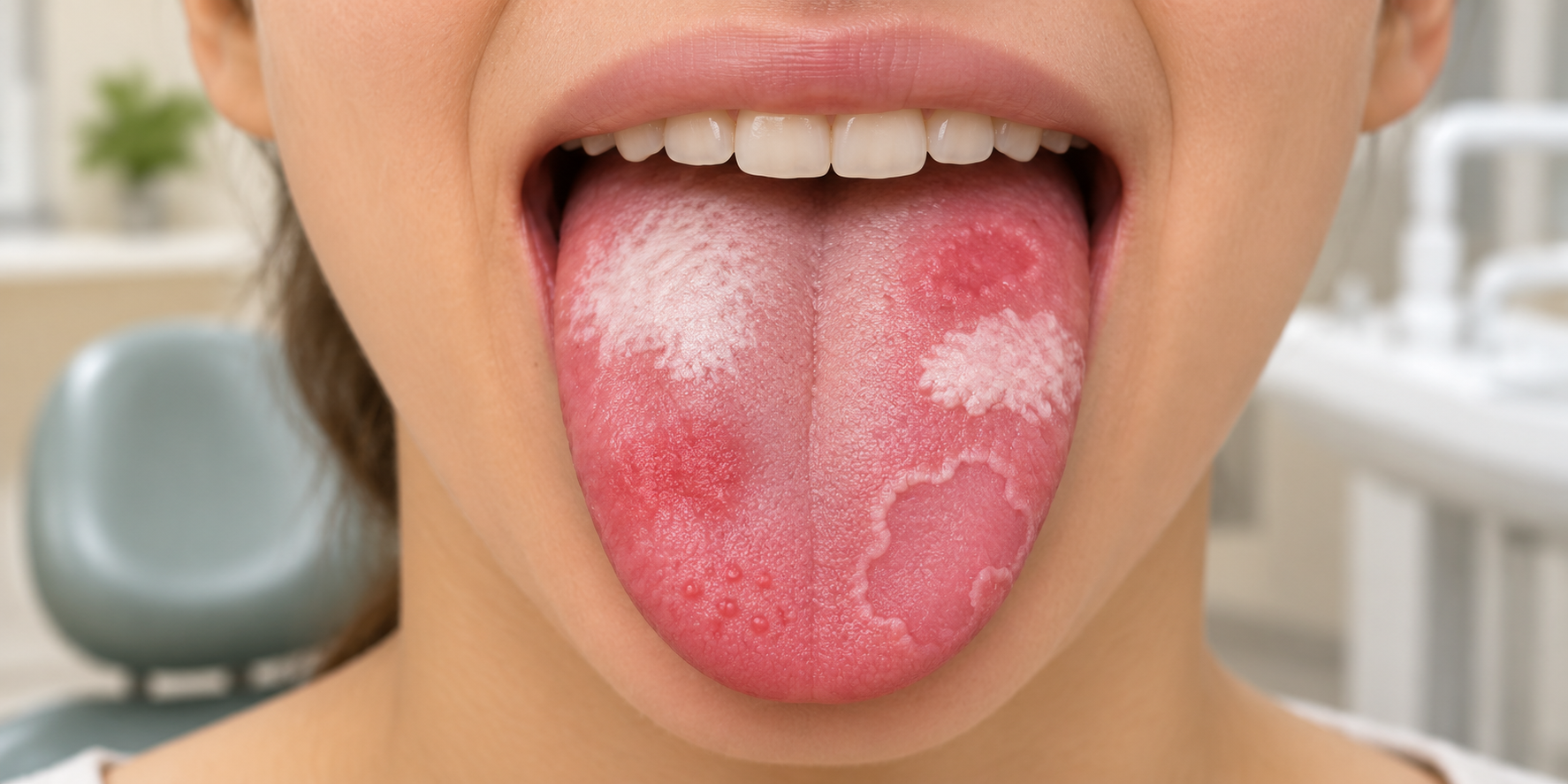
Noticed a red patch, white spot, or unusual bump on your tongue while brushing your teeth? It is natural to wonder what caused it, especially if it was not there before.
Spots on tongue can develop from minor irritation, mouth ulcers, fungal infections, or other oral conditions. Most are harmless, but some need professional attention.
At Little Bites Dental Clinic in Faridabad, we believe understanding changes in your mouth is an important part of preventive dental care.
What Do Different Spots on Tongue Mean?
The colour and appearance of tongue spots can provide clues, but they cannot confirm a diagnosis.
| Appearance | Possible causes |
|---|---|
| Red spots or bumps | Inflamed papillae, irritation, geographic tongue |
| White spots or patches | Oral thrush, ulcers, leukoplakia |
| Black or brown patches | Pigmentation, staining, black hairy tongue |
| Red patches with white borders | Geographic tongue |
| Painful white or yellow sores | Canker sores or minor injuries |
A healthy tongue naturally has tiny bumps called papillae. Some contain taste buds, while others help with food movement. Not every visible bump is abnormal. What matters is whether a spot is new, changing, painful, or persistent.
9 Possible Causes of Spots on Tongue
1. Lie Bumps (Inflamed Taste Buds)
Small, painful red or white bumps can develop when the tongue's papillae become inflamed. This condition is called transient lingual papillitis. Possible triggers include minor injury, irritating foods, and friction. These bumps generally settle within a few days. Despite their nickname, lie bumps are not caused by telling lies.
2. Geographic Tongue
Geographic tongue creates smooth, irregular red patches surrounded by pale or white borders. The patches may change shape or move to different areas over time, giving the tongue a map-like appearance. It is harmless and non-contagious. Some people experience sensitivity to spicy or acidic foods, but treatment is usually unnecessary.
3. Canker Sores (Mouth Ulcers)
Canker sores are small, painful ulcers with a white or yellow centre and a red border. They can appear on or underneath the tongue and make eating uncomfortable. Minor injuries, stress, and certain nutritional deficiencies may contribute. Most heal within one to two weeks.
4. Oral Thrush (Fungal Infection)
Oral thrush occurs when Candida yeast grows excessively inside the mouth. It often produces creamy white patches on the tongue or inner cheeks. These patches may wipe away, leaving red, tender tissue. Babies, denture wearers, and people using certain medications may be more susceptible. Oral thrush sometimes requires prescribed antifungal treatment.
5. Tongue Burns or Accidental Biting
A hot cup of tea, sharp tooth edge, or accidental bite can damage the tongue's surface. The affected area may develop a red spot, sore, or small blister. Minor injuries usually heal naturally. Repeated irritation from a broken tooth or dental appliance should be assessed.
6. Nutritional Deficiencies
Deficiencies involving vitamin B12, iron, or folate can sometimes cause tongue inflammation. The tongue may look unusually smooth, red, or sore rather than developing clearly separated spots. If symptoms continue or occur alongside fatigue or mouth soreness, a healthcare professional may recommend blood tests.
7. Black Hairy Tongue
Black hairy tongue can make the tongue appear brown, dark, or almost black. It develops when papillae on the tongue's surface become elongated and trap debris, pigments, or microorganisms. Smoking, dry mouth, and certain medications may contribute. Although the appearance can be concerning, the condition is usually benign and often improves with appropriate oral hygiene.
8. Leukoplakia
Leukoplakia may appear as a thick white or grey patch that cannot be easily wiped away. It can affect the tongue and other areas of the mouth. Tobacco exposure is an important risk factor. Some leukoplakia patches contain potentially precancerous changes, although not every white patch is leukoplakia. A persistent patch needs dental assessment and sometimes a biopsy.
9. Oral Cancer or Other Serious Conditions
Occasionally, a persistent red or white patch, lump, or ulcer on the tongue may indicate oral cancer. Other warning signs include unexplained bleeding, persistent pain, or difficulty swallowing. Most tongue spots are not cancer. However, a painless spot is not automatically harmless. Any unexplained spot that remains for two weeks should be evaluated rather than ignored.
How to Get Rid of Spots on Tongue
Treatment depends on the underlying cause. There is no single medicine that works for every type of tongue spot.
For mild irritation, you can try:
- Rinsing gently with warm salt water.
- Avoiding spicy, acidic, or excessively hot foods.
- Using a soft toothbrush and cleaning your tongue gently.
- Drinking enough water and avoiding tobacco.
- Avoiding squeezing, scraping, or popping tongue bumps.
Fungal infections may require antifungal medication, while persistent patches or recurrent ulcers may need further investigation.
When Should You See a Dentist for Tongue Spots?
Arrange a dental examination if you notice:
- A spot or ulcer that has not healed within two weeks.
- A persistent red or white patch.
- Unexplained bleeding, a firm lump, or increasing pain.
- Difficulty swallowing or moving your tongue.
- A recurring sore in the same location.
Seek urgent medical attention if tongue swelling causes breathing difficulty.
Conclusion
Spots on tongue can have several causes, from temporary irritation to conditions requiring treatment. Their colour alone does not tell the whole story.
If a spot continues, changes appearance, or causes discomfort, getting it checked is safer than relying on internet pictures or self-diagnosis.
Dental Consultation in Faridabad
If you are concerned about an unusual tongue patch, ulcer, or persistent mouth sore, Little Bites Dental Clinic in Faridabad can provide a dental examination and advise whether further assessment or specialist referral is needed.
Early evaluation can help identify the cause and avoid unnecessary treatment.
References
- Cleveland Clinic - Spots on Tongue
- NHS - Mouth Ulcers
- NHS - Oral Thrush
- NHS - Mouth Cancer Symptoms
- Mayo Clinic - Canker Sore Treatment