Canker sores are small, painful ulcers inside the mouth that can make eating, drinking and brushing uncomfortable. How to treat canker sores in the mouth depends on their size, severity, frequency and possible cause.
Most minor canker sores heal naturally within about one to two weeks. Treatment is mainly aimed at reducing pain, protecting the ulcer from further irritation and, in recurrent cases, identifying possible triggers or underlying factors.
At Little Bites Dental Clinic in Faridabad, persistent or recurrent mouth ulcers can be examined to determine whether they look like ordinary canker sores or require further dental or medical evaluation.
What Is a Canker Sore?
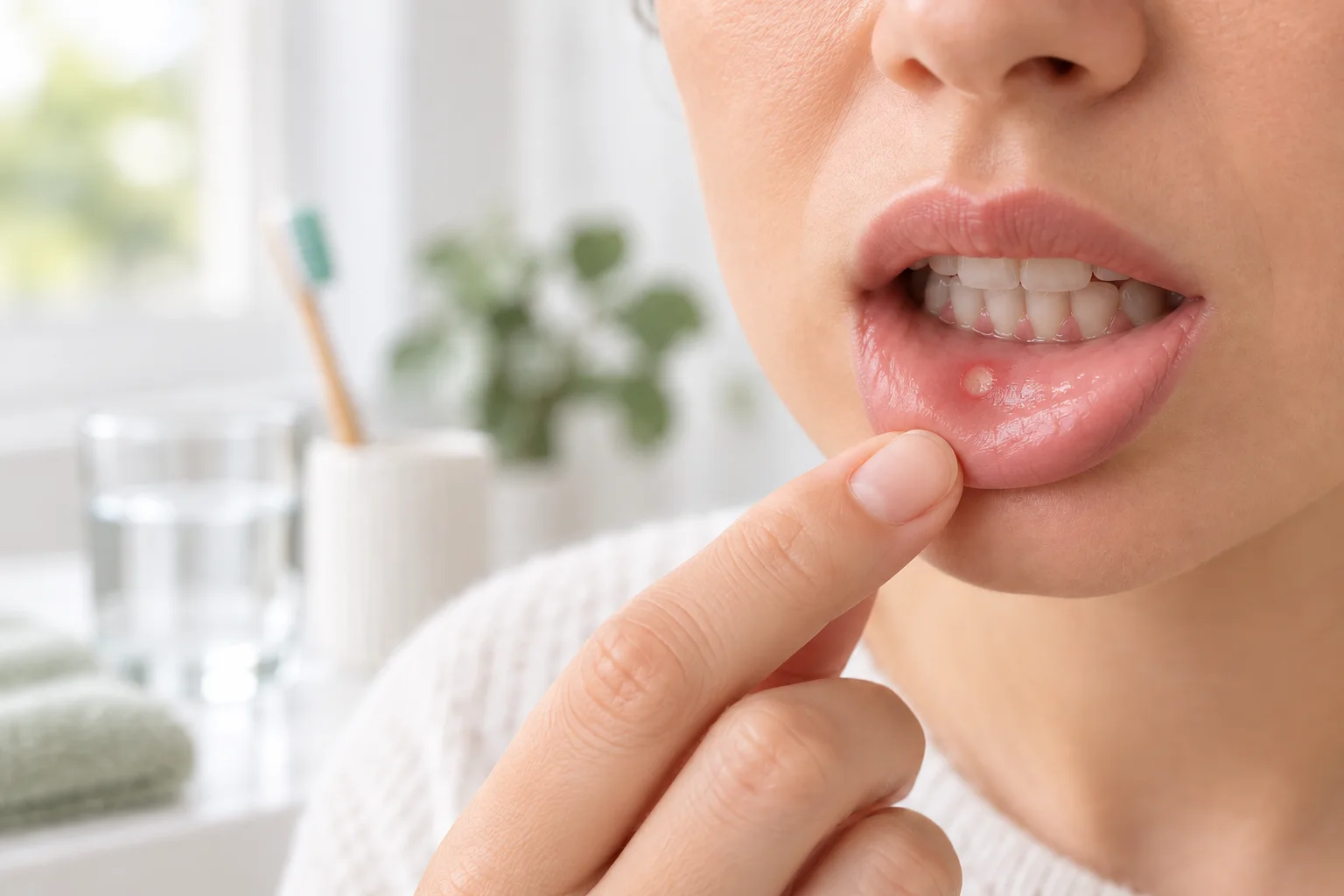
A canker sore, medically called an aphthous ulcer, is a small ulcer that develops on the soft tissues inside the mouth.
Common locations include:
- inside the lips
- inside the cheeks
- on or under the tongue
- near the gums
- other non-keratinised areas of the mouth
A typical canker sore is round or oval with a pale white, yellow or grey centre surrounded by a red border.
Unlike cold sores, ordinary canker sores are not caused by the herpes virus and are not contagious.
What Is the White or Yellow Part of a Canker Sore?
The white or yellow centre of a typical canker sore is not usually pus.
When the surface lining of the mouth breaks down, the ulcer can develop a pale coating made up of fibrin and healing tissue. This can make the centre appear white, yellowish or grey.
Trying to scrape this layer away may cause more pain and irritation.
A typical canker sore should gradually improve as the tissue heals. If a white patch cannot be wiped away, persists, becomes hard, bleeds repeatedly or looks different from an ordinary ulcer, it should be examined.
What Causes Canker Sores Inside the Mouth?
There is not always one clear cause. In many people, several factors may contribute.
Possible triggers or associations include:
- accidentally biting the cheek or lip
- aggressive brushing
- irritation from braces or another dental appliance
- stress
- certain irritating foods
- hormonal changes in some people
- some medications
- nutritional deficiencies
- certain gastrointestinal, immune or systemic conditions
Having a canker sore does not automatically mean you have poor oral hygiene.
Are Canker Sores Caused by Poor Hygiene?
Usually, no.
Canker sores can occur even in people with good oral hygiene. They are different from gum disease or dental infections caused primarily by plaque accumulation.
However, keeping the mouth clean is still useful while an ulcer heals.
Brush gently with a soft toothbrush and avoid aggressively brushing directly over the sore.
How to Treat Canker Sores in the Mouth
For a typical minor canker sore, the goal is usually to reduce pain and irritation while allowing natural healing to occur.
1. Avoid Foods That Irritate the Ulcer
Temporarily avoid foods that make the ulcer burn or hurt, particularly:
- spicy food
- citrus fruits
- acidic juices
- very salty food
- very hot food or drinks
- hard chips, toast or other sharp foods
Softer, cooler foods may be more comfortable.
2. Use a Gentle Salt-Water Rinse
A warm salt-water rinse may help soothe the area and keep the mouth clean.
It should be used gently rather than aggressively swished around the mouth.
Salt water may provide symptom relief, but it should not be promoted as an instant cure for a canker sore.
3. Maintain Gentle Oral Hygiene
Continue brushing your teeth even when you have a canker sore. See our dentist-recommended toothpaste guide for daily care.
Use a soft-bristled toothbrush and be careful around the affected area.
Stopping oral hygiene completely may allow plaque to build up and make the mouth feel less comfortable.
4. Consider Appropriate Pharmacy Treatments
Several over-the-counter oral gels, liquids, protective pastes or pain-relief products may temporarily reduce discomfort.
For more severe or recurrent ulcers, a dentist or healthcare professional may sometimes prescribe treatments such as a topical corticosteroid or medicated mouth rinse.
The most appropriate medicine depends on:
- age
- ulcer severity
- number of ulcers
- frequency of recurrence
- other medical conditions
- medicines already being taken
Do not repeatedly self-medicate severe or recurring ulcers without determining why they keep occurring.
What Is the Best Medicine for Canker Sores?
There is no single best medicine for every canker sore.
Minor ulcers often need no prescription treatment and heal naturally.
For painful or more troublesome ulcers, treatment may include:
| Option | Main Purpose |
|---|---|
| Protective oral gel or paste | Covers the sore and reduces irritation |
| Local pain-relief product | Temporarily reduces discomfort |
| Medicated mouth rinse | May be used in selected cases |
| Topical corticosteroid | May reduce inflammation in more troublesome or recurrent ulcers |
| Systemic treatment | Reserved for selected severe or recurrent cases |
Prescription treatment should be based on the diagnosis rather than simply choosing the strongest available product.
Can You Get Rid of a Canker Sore in 24 Hours?
Usually, no.
There is no reliable treatment that makes a typical canker sore completely disappear overnight.
Some treatments may reduce pain fairly quickly, especially when used early, but the ulcer itself usually requires several days to heal.
Be cautious with online remedies claiming to “kill” or permanently remove a canker sore in a few hours.
How Long Do Canker Sores Last?
Most minor canker sores heal within approximately 7–14 days.
Larger aphthous ulcers may take longer.
If an ulcer has not healed after around three weeks, or looks unusual at any point, it should be assessed by a dentist or healthcare professional.
You should seek advice sooner if the ulcer causes severe pain, significant difficulty eating or drinking, fever, swelling or other unexplained symptoms.
Which Vitamin Deficiency Can Cause Canker Sores?
Recurrent canker sores are sometimes associated with nutritional deficiencies, but a deficiency should not be assumed from an ulcer alone.
Factors that may be investigated in selected patients include:
- vitamin B12
- iron
- folate
- sometimes zinc or other nutrients depending on the clinical situation
If mouth ulcers occur frequently, blood tests may be considered based on the person's history and other symptoms.
Taking high-dose supplements without confirming a deficiency is not the same as treating the underlying cause.
What Drinks Help With Canker Sores?
There is no drink that cures a canker sore.
The simplest choice is usually cool water or another non-acidic drink that does not irritate the ulcer.
Avoid or limit drinks that sting the area, such as:
- citrus juices
- highly acidic beverages
- very hot tea or coffee
- fizzy acidic drinks
Keeping well hydrated is particularly important if pain is making eating or drinking uncomfortable.
What Makes Canker Sores Worse?
Several things can repeatedly irritate an existing ulcer:
- spicy foods
- acidic foods or drinks
- very hot foods
- sharp or crunchy foods
- repeatedly touching the ulcer with the tongue
- biting the area
- aggressive toothbrushing
- trying to scrape or pop the ulcer
The goal is to protect the area while the lining of the mouth repairs itself.
Why Do I Keep Getting Canker Sores?
An occasional ulcer may not indicate a significant problem.
Repeated episodes deserve closer attention.
Possible contributing factors include:
- recurring trauma
- stress
- nutritional deficiencies
- certain food triggers
- medications
- family tendency
- gastrointestinal or immune-related conditions
An Indian expert consensus on recurrent aphthous stomatitis recommends considering clinical history along with investigations such as vitamin B12 and iron studies in appropriate recurrent cases.
Keeping a simple record of when ulcers occur can also help reveal patterns.
Canker Sore on the Tongue: Is It Different?
Aphthous ulcers can occur on the tongue and may feel particularly painful because the tongue constantly moves during eating and speaking.
Treatment principles are generally similar:
- minimise irritation
- avoid trigger foods
- maintain gentle oral hygiene
- control discomfort
- allow time for healing
A tongue ulcer that remains for several weeks, repeatedly bleeds, feels unusually hard or does not behave like a normal canker sore should be examined.
Canker Sore vs Cold Sore: What Is the Difference?
| Feature | Canker Sore | Cold Sore |
|---|---|---|
| Typical location | Inside the mouth | Usually on or around the lips |
| Appearance | Ulcer with pale centre and red border | Often begins as fluid-filled blisters |
| Contagious? | No | Yes |
| Usual cause | Multifactorial / often unclear | Herpes simplex virus |
Not every oral lesion is a canker sore. Diagnosis matters when the appearance or healing pattern is unusual.
When Should You See a Dentist for a Canker Sore?
Most minor ulcers do not require dental treatment.
Seek professional assessment if:
- an ulcer persists for around three weeks
- ulcers keep returning
- the sore is unusually large
- pain is severe or worsening
- you have several ulcers at once
- eating or drinking becomes difficult
- there is unexplained swelling or fever
- the ulcer repeatedly bleeds
- the lesion feels unusually hard
- it looks different from your usual canker sores
A dentist can determine whether the lesion is consistent with an ordinary aphthous ulcer or whether further investigation or medical referral is appropriate.
Dr. Nikitaa Dhingra Sanan, Little Bites Dental Clinic: “When a mouth ulcer keeps returning or does not follow the usual healing pattern, it is important to look beyond simply treating the discomfort. An examination can help identify local irritation and determine whether further evaluation is appropriate.”
Conclusion
Learning how to treat canker sores in the mouth starts with recognising that most minor ulcers heal naturally within one to two weeks.
Gentle oral hygiene, avoiding foods that irritate the ulcer, suitable rinses and appropriate pain-relief products can make the healing period more comfortable.
There is no dependable overnight cure, and recurrent ulcers should not automatically be blamed on hygiene or vitamin deficiency.
The important exception is an ulcer that persists, repeatedly returns or has unusual features. Those lesions deserve professional assessment.
If you have a persistent or frequently recurring mouth ulcer in Faridabad or Delhi NCR, a dental examination at Little Bites Dental Clinic, Faridabad can help determine whether it appears to be a typical canker sore or whether further evaluation may be appropriate.
Explore our tooth pain guide and general dental care in Faridabad, or contact Little Bites Dental Clinic.
References
- Mayo Clinic — Canker Sore: Diagnosis and Treatment
- Cleveland Clinic — Canker Sores: Symptoms, Causes & Treatment
- NHS — Mouth Ulcers
- UCLH — Recurrent Aphthous Stomatitis
- PubMed — Management of Recurrent Aphthous Stomatitis: An Indian Expert Consensus